

Exosomes at LÚUM Aesthetics
EXOSOMAL THERAPY PERTH
Exosome therapy is a treatment that utilises extracellular vesicles (exosomes), which are naturally occurring particles involved in cellular communication. Exosomes contain a range of proteins, lipids and signalling molecules and are currently being investigated for their potential role in tissue repair and skin health.
In aesthetic medicine, exosome therapy may be used as part of a treatment plan aimed at supporting skin quality and recovery following procedures such as microneedling and laser treatments. Research in this area is ongoing, and treatment outcomes may vary between individuals.
Potential Applications of Exosome Therapy
Current research has investigated exosomes for their potential role in:
Supporting skin quality and overall skin appearance
Improving skin texture and skin smoothness
Addressing signs of skin ageing, including fine lines
Supporting recovery following selected skin procedures
Reducing the appearance of redness associated with skin irritation
Supporting the skin's natural repair processes
-
From $260
Please book a consultation and talk to your clinician to discuss your treatment options & package pricing.

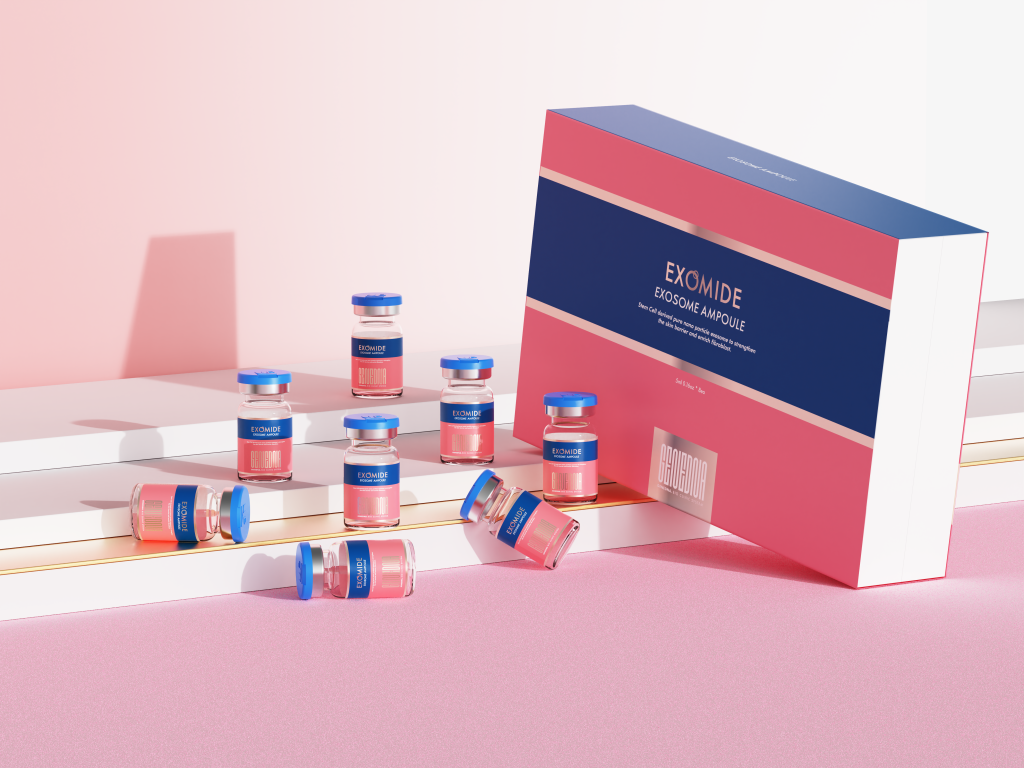
EXOMIDE® SKIN (5 BILLION EXOSOMES)
One ampoule of Exomide® Skin contains 5 billion exosomes together with growth factors, peptides, amino acids and hyaluronic acid. The product is intended to complement skin treatments by supporting the skin's natural repair processes and overall skin health.Research into exosome-based therapies is ongoing, and individual responses to treatment may vary.Exomide® Skin is a topical exosome formulation designed to be used alongside procedures such as microneedling, radiofrequency needling, and selected laser treatments. It contains exosomes, peptides, amino acids, hyaluronic acid, niacinamide, and other bioactive ingredients that are being investigated for their potential role in supporting skin quality and recovery following skin procedures.Current research and manufacturer information suggest Exomide® may be used to support:
Skin elasticity and firmness.
Skin hydration and barrier function.
Skin texture and overall skin quality.
The appearance of fine lines and signs of skin ageing,
Overall skin tone and complexion.
Recovery following selected skin procedures
Kalluri, R., & LeBleu, V. S. (2020). The biology, function, and biomedical applications of exosomes. Science, 367(6478), eaau6977. https://doi.org/10.1126/science.aau6977Kim, J., Lee, Y., & Gho, Y. S. (2022). Extracellular vesicles in skin wound healing and skin regeneration. International Journal of Molecular Sciences, 23(3), 1535. https://doi.org/10.3390/ijms23031535
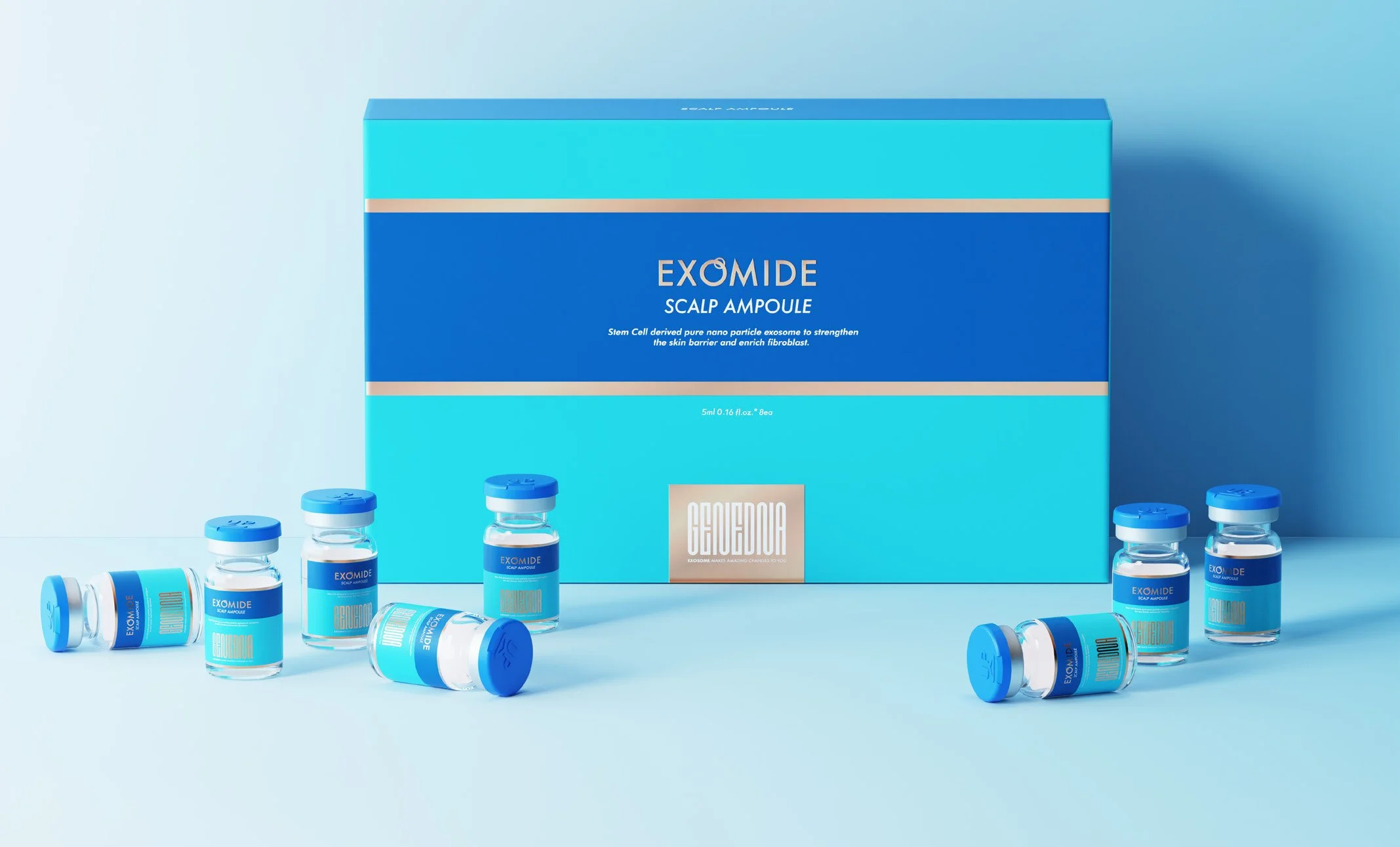
EXOSOMAL THERAPY FOR SCALP HEALTH AND HAIR THINNING
Exomide® Hair – 10 Billion Exosomes is a topical exosome formulation developed for use alongside scalp treatments. It contains exosomes, peptides, amino acids and other bioactive ingredients that are being investigated for their potential role in supporting scalp health and the management of certain types of hair thinning. Exomide® Hair contains 10 billion exosomes per treatment and is commonly used in conjunction with procedures such as microneedling and Platelet-Rich Plasma (PRP) as part of an individualised treatment plan.Research into exosome-based therapies for hair loss and scalp health is ongoing. Individual responses vary and no specific outcome can be guaranteed..Current research and manufacturer information suggest Exomide® Hair may be used to support
:Overall scalp health and condition
Hair quality and hair fibre appearance
The appearance of hair fullness
The management of hair thinning
Recovery following selected scalp procedures
The scalp's natural repair and renewal processes
Exomide® Hair contains 10 billion exosomes per treatment and is commonly used in conjunction with procedures such as microneedling and Platelet-Rich Plasma (PRP) as part of an individualised treatment plan.Research into exosome-based therapies for hair loss and scalp health is ongoing. Individual responses vary and no specific outcome can be guaranteed. A consultation with a qualified practitioner is required to determine suitability, discuss potential benefits and risks, and explore alternative treatment options.
Lim, Y. H., Kim, J. H., Choi, M., & Shin, H. S. (2024). Extracellular vesicles and exosomes in hair follicle biology and hair regeneration: Current evidence and future perspectives. International Journal of Molecular Sciences, 25(2), 1043.Kalluri, R., & LeBleu, V. S. (2020). The biology, function, and biomedical applications of exosomes. Science, 367(6478), eaau6977. https://doi.org/10.1126/science.aau6977
EXOSOMAL THERAPY FAQS
-
Exosomes are small nano-sized vesicles that are produced and released by human cells that contain proteins.
Once exosomes are pushed outside a cell they play a crucial role in cell-to-cell communication with the ability to transfer information and change the behaviour of neighbouring cells.
This intercellular communication can influence:
Cell regeneration
Tissue repair
It is important to note that exosomes are not cells themselves; they are small vesicles released by cells and are incapable of reproduction. They are cell-free, DNA-free and their main function is to influence other cells giving them a favourable safety profile.
-
Exosome-based therapies are an emerging area of regenerative medicine, and research into their safety, mechanisms of action, and clinical applications is ongoing. While early laboratory studies and preliminary clinical research have shown promising results in selected applications, there is currently limited long-term clinical data available. As a result, the effectiveness and safety profile of exosome therapies continue to be evaluated, and treatment outcomes may vary between individuals. Patients should discuss the potential benefits, limitations, risks, costs, and alternative treatment options with their practitioner.
-
Exomide™ is a regenerative exosome therapy derived from adipose tissue (fat tissue) stem cells.
Exomide™ is extracted, purified then mixed with advance ingredients.
Exomide™ advance formula includes:
7 Growth Factors
17 Amino Acids
6 Peptides
8 Types of Hyaluronic Acid
3 Active skincare ingrendients
-
No. Exomide™ is an exosome which are secreted by cells in the body (they are not cells).
Therefore, they cannot replicate or transform because they are cell-free and DNA free.
-
Paraben Free
Silicone Free
Hydroquinone Free
Retinol Free (Vitamin A)
Formaldehyde Free
Isoflavones Free
Aromatic Oils (Essential Oils) Free
-
Recovery following exosome therapy depends largely on the procedure it is combined with, such as microneedling, radiofrequency microneedling, or laser treatments.
Common side effects may include:
Redness
Mild swelling
Tenderness or sensitivity
Dryness or flaking
Itching
Temporary warmth or tightness
Less common risks may include:
Infection
Prolonged redness or swelling
Skin irritation or allergic reactions
Breakouts
Changes in skin pigmentation
Exosome therapies are an emerging area of regenerative medicine, and long-term safety and efficacy data remain limited.
Recovery
Most patients experience redness and mild sensitivity for 24–72 hours, although recovery time varies depending on the accompanying treatment. Your practitioner will provide post-treatment instructions tailored to your procedure.
As with all medical and aesthetic treatments, individual responses vary and outcomes cannot be guaranteed.