

PLATELET-RICH PLASMA (PRP) TREATMENT PERTH
What is PRP?
Platelet-Rich Plasma (PRP) is a procedure that involves collecting a small sample of your blood, processing it to concentrate the platelets, and then reintroducing the platelet-rich plasma into targeted areas of the skin or scalp.
Platelets contain a range of growth factors and signalling proteins that play a role in the body's natural healing and tissue repair processes. PRP is used in a variety of medical and aesthetic applications and may be considered as part of a personalised treatment plan following a consultation with a qualified health practitioner.
What is PRP used for?
PRP may be used to support skin quality and scalp health. Treatment recommendations are based on an individual's concerns, medical history and clinical assessment.
Areas that may be addressed include:
Skin texture and overall skin quality
Skin hydration and elasticity
Fine lines and signs of skin ageing
Acne scarring and other superficial scars
Sun-damaged skin
Hair thinning and certain types of hair loss
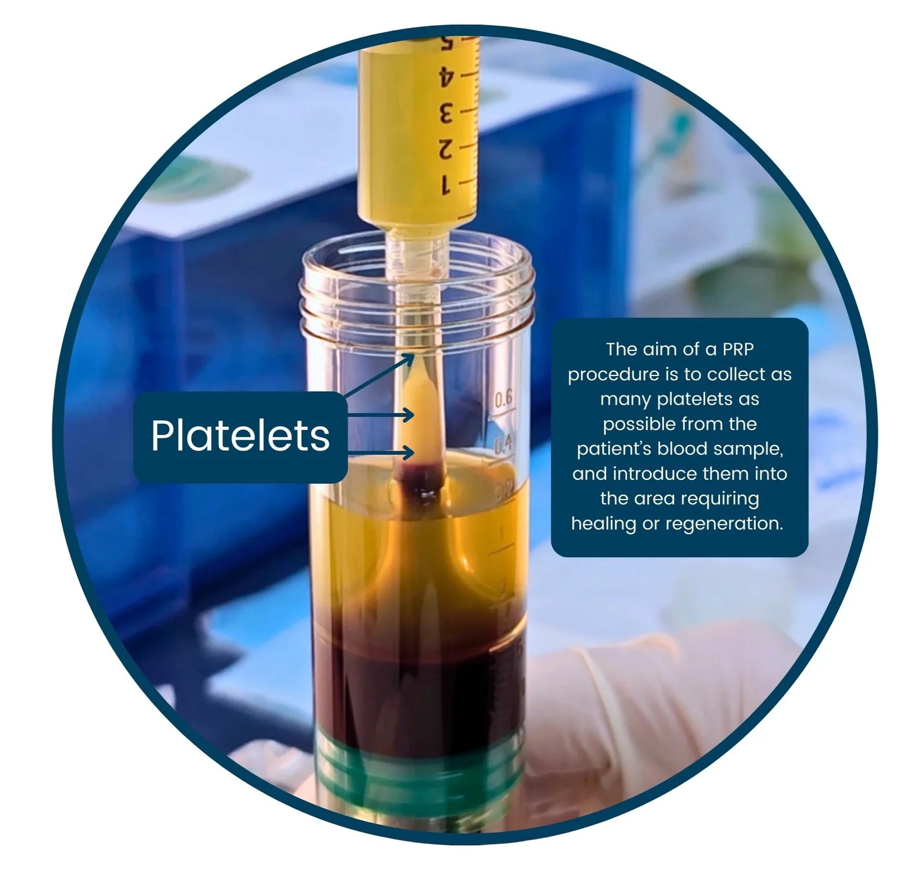
What to expect during your Platelet-Rich Plasma (PRP) Treatment?
Platelet-Rich Plasma (PRP) is a procedure that involves collecting a small sample of your blood and processing it to concentrate platelets and the growth factors they contain. The platelet-rich plasma is then administered into the skin or scalp as part of a personalised treatment plan.
Platelets play an important role in tissue repair and wound healing. In aesthetic and hair restoration medicine, PRP has been investigated for its potential role in supporting skin quality, collagen formation, and the management of certain types of hair thinning.
At LUUM Aesthetics, we utilise the AlloCure® PRP system. This device is designed to produce a platelet-rich plasma preparation with a high concentration of platelets while reducing the presence of red blood cells and other cellular components that may contribute to inflammation. Research has demonstrated that PRP preparations with higher platelet concentrations and lower red blood cell contamination may provide a more favourable biological environment for tissue repair and regeneration (2).
Clinical studies have reported that PRP may assist in improving skin quality parameters such as texture, elasticity, and overall skin appearance, while in hair restoration, PRP has been associated with improvements in hair density and hair thickness in selected patients with androgenetic alopecia (1). Outcomes vary between individuals, and responses are influenced by factors including age, genetics, underlying medical conditions, and the severity of hair or skin concerns.
Potential Uses of Platelet-Rich Plasma (PRP)
Platelet-Rich Plasma (PRP) contains a concentration of platelets and growth factors derived from a patient's own blood. PRP has been investigated across a range of medical and aesthetic applications due to its potential role in tissue repair and regeneration.Current evidence suggests PRP may be considered as part of a treatment plan for concerns relating to skin quality and certain types of hair loss. Potential applications include:
Skin Quality and Texture
PRP has been investigated for its potential role in supporting skin quality, including skin texture, elasticity and overall appearance. Some studies have reported improvements in skin texture and skin quality following a series of treatments.
Fine Lines and Signs of Skin Ageing
Research has explored the use of PRP for age-related skin changes. Some patients may experience improvements in the appearance of fine lines and skin texture; however, individual responses vary.
Acne Scarring and Skin Repair
PRP may be used alongside procedures such as microneedling and laser treatments. Studies suggest that combining PRP with these procedures may support tissue repair and may contribute to improvements in the appearance of certain acne scars.
Skin Tone and Photodamage
PRP has been evaluated for its potential role in improving overall skin quality, including concerns relating to uneven skin tone and photodamage.
Hair Thinning and Hair Loss
PRP has been studied as a treatment option for androgenetic alopecia (pattern hair loss). Clinical studies have reported improvements in hair density and hair thickness in some patients following a series of treatments (1, 4).
PRP TREATMENT FREQUENTLY ASKED QUESTIONS
-
All Platelet Rich Injection treatments are bespoke to your needs and a consultation is needed to assess if PRP treatment is correct for you. However, some generalised pricing is mentioned below.
Full face of skin needling + PRP: from $850
Specific area of concern ie undereyes $750
Scalp (hair growth): from $750
Please note, a consultation with one of our qualified nurses prior to your PRP treatment is required to ensure patient suitability.
-
Initial Results (0-3 months): In the first few weeks to months after PRP treatment, some individuals may notice a reduction in hair shedding. This is often one of the earliest signs that the treatment is working. Your hair may also appear slightly thicker and healthier.
Early Growth Phase (3-6 months): During this phase, you may begin to see small, fine hairs (vellus hairs) starting to grow in the treated areas. These hairs will continue to thicken and become more visible with time.
Noticeable Improvement (6-12 months): Most people experience more noticeable improvements in hair thickness and density between 6 to 12 months after PRP treatment. Hair growth may become more robust, and the overall appearance of your hair should improve.
Full Results (12+ months): The full benefits of PRP therapy for hair growth typically become apparent after a year or more of consistent treatment. At this stage, you should see significant improvements in hair thickness, density, and coverage in the treated areas.
It's important to note that individual responses can vary, and some people may require multiple PRP sessions spaced a few months apart to achieve optimal results. Additionally, maintenance sessions may be recommended to sustain the improvements over time. The exact timeline and results depend on factors like the severity of hair loss, the individual's unique physiology, and the quality of the PRP procedure performed.
-
The timeline for seeing results from Platelet Rich Plasma (PRP) injections for your face for wrinkle improvement can vary, but here's a general guideline:
Initial Results (0-2 weeks): Immediately after the PRP treatment, you may experience some initial improvements in your skin's texture and tone. Some patients notice a subtle glow and improved hydration shortly after the procedure.
Early Improvements (2-6 weeks): Over the next several weeks following the PRP injections, you may notice gradual changes in your skin's appearance. Fine lines and wrinkles may appear softer, and your skin may appear more refreshed. These early results are often subtle but can become more pronounced with time.
Noticeable Improvement (2-3 months): Most individuals experience more noticeable improvements in their skin texture and reduction in wrinkles around 2 to 3 months after PRP treatment. Collagen production and tissue regeneration contribute to smoother, firmer skin.
Full Results (6-12 months): The full benefits of PRP therapy for facial wrinkle improvement usually become apparent within 6 to 12 months after treatment. At this point, your skin should exhibit more significant rejuvenation, with reduced fine lines and improved overall texture.
It's important to remember that individual responses to PRP can vary based on factors such as the severity of wrinkles, skin type, age, and the quality of the PRP procedure performed. For some individuals, multiple PRP sessions spaced several weeks apart may be recommended to achieve optimal results.
Maintenance sessions may also be advised to prolong the improvements over time. Consult with a qualified healthcare professional or dermatologist experienced in PRP for facial rejuvenation to discuss your specific needs and expectations for wrinkle improvements.
-
The recovery and downtime for Platelet-Rich Plasma (PRP) therapy can vary depending on the specific treatment area and the individual's response. Generally, PRP is known for its minimal downtime and relatively short recovery period compared to more invasive procedures. Here's what you can typically expect:
Immediate Post-Treatment Period (0-48 hours): After a PRP procedure, you may experience some mild swelling, redness, and discomfort at the injection site. These side effects are usually temporary and can be managed with over-the-counter pain relievers and ice packs. Most people can resume their regular daily activities within a day or two.
Bruising: While not everyone experiences bruising, it can occur, especially in sensitive areas or if multiple injections are administered. Any bruising is typically mild and typically resolves within the week.
Activity Restrictions: It's generally recommended to avoid strenuous physical activities, excessive sun exposure, and saunas for a few days after the procedure to minimize the risk of infection and to allow the treatment area to heal.
Results and Downtime: PRP is known for its minimal downtime. You may see some immediate improvements in skin texture and hydration, but the full results often take several weeks to months to become noticeable. During this time, there is a risk of bruising and swelling but typically no significant downtime, and you can continue with your regular daily routine.
Follow-Up Sessions: Depending on your treatment goals and the recommendation of your healthcare provider, you may need multiple PRP sessions spaced several weeks apart. In such cases, the downtime and recovery are usually minimal after each session.
It's crucial to follow your healthcare provider's post-treatment instructions carefully to ensure a safe and effective recovery. PRP is a safe and well-tolerated procedure for most individuals, making it an attractive option for those seeking cosmetic enhancements with minimal disruption to their daily lives. However, individual experiences can vary, so it's essential to discuss your specific case and expectations with your healthcare provider before undergoing PRP therapy.
-
Results of the Platelet Rich Plasma (PRP) injections can last anywhere from several months to over a year. Maintenance sessions are often recommended to extend the benefits over time. The frequency of maintenance treatments will depend on the individual and the specific treatment area. Consult with your healthcare provider to create a personalized treatment plan that aligns with your goals and expectations. Additionally, adopting a healthy lifestyle, including proper skincare and hair care, can help maximize and prolong the results of PRP treatments.
-
A suitable candidate for PRP is generally an individual whom is in good health, does not have a history of high cholesterol, smoking or bleeding disorders, this is general advice and PRP is not be appropriate for all patients. A consultation with one of our qualified practitioners is required to determine whether this treatment is suitable for your individual circumstances and to discuss potential benefits, risks, downtime and alternative treatment options.
-
Common risks of PRP include temporary redness, swelling, bruising, tenderness, pinpoint bleeding, itching, and discomfort at the treatment site, with infection and allergic reaction being uncommon but possible risks of any injectable procedure. Your practitioner will discuss all risks and complications during your consultation.
-
(1) Gupta, A. K., Carviel, J., & Abramovits, W. (2019). Platelet-rich plasma for androgenetic alopecia: A systematic review and meta-analysis. Journal of Dermatological Treatment, 30(4), 355–361. https://doi.org/10.1080/09546634.2018.153044
(2) Maisel-Campbell, A. L., Ismail, A., Reynolds, K. A., Poon, E., Serrano, L., Grushchak, S., & Nouri, K. (2020). A systematic review of the safety and effectiveness of platelet-rich plasma (PRP) for skin aging. Archives of Dermatological Research, 312(5), 301–315. https://doi.org/10.1007/s00403-019-02021-6
(3) Husein-ElAhmed, H., Steinhoff, M., & Alhaddad, M. (2022). Platelet-rich plasma as an adjuvant treatment for acne scars: A systematic review and meta-analysis. Journal of Cosmetic Dermatology, 21(9), 3907–3916. https://doi.org/10.1111/jocd.14892
(4) Gentile, P., Garcovich, S., Bielli, A., Scioli, M. G., Orlandi, A., Cervelli, V., & Curcio, B. C. (2020). The effect of platelet-rich plasma in hair regrowth: A randomized placebo-controlled trial. Stem Cells Translational Medicine, 9(10), 1201–1211. https://doi.org/10.1002/sctm.19-0434