Why Is My Hair Thinning? Menopause, Weight Loss, and What Can Help
If you've noticed more hair than usual on your pillow, in the shower, or caught in your brush lately, you're not imagining it - and you're not alone.
Hair thinning is one of the concerns we hear about most often from women in our clinic, particularly those going through menopause or who have recently lost weight.
The good news is that hair shedding in these circumstances is a well-understood physiological response, and there are structured, evidence-informed options to explore once the underlying cause is understood.
Why does hair thinning happen during menopause?
Hair growth is regulated in part by hormones, and oestrogen and progesterone both play a role in keeping hair in its growth phase for longer.
As these hormone levels decline during perimenopause and menopause, more hair follicles can shift into the resting and shedding phase at once, which tends to show up as increased shedding, thinning at the part line, or a generally less dense ponytail.
This process is often accompanied by changes in hair texture, many women notice their hair becoming finer or drier around the same time. It's a normal part of the menopause transition, though the degree to which it's noticeable can vary considerably from person to person.
Why can weight loss trigger hair shedding too?
A rapid or significant drop in weight can place the body under nutritional and physiological stress, which can push hair follicles into a shedding phase known as telogen effluvium.
This is typically temporary and tends to appear two to three months after the initial trigger, which can make the connection to weight loss easy to miss at first.
Because this type of shedding is usually related to nutrient intake, iron stores, protein levels, or the metabolic impact of rapid change, it's worth having it assessed rather than assumed - particularly if the shedding is significant or ongoing.
How We Treat Hair Thinning at LÚUM
At LÚUM, we tend to look at hair thinning from two angles: supporting the scalp and follicles directly and identifying whether there's an underlying medical driver that needs attention.
In-clinic Allocure PRP for the scalp
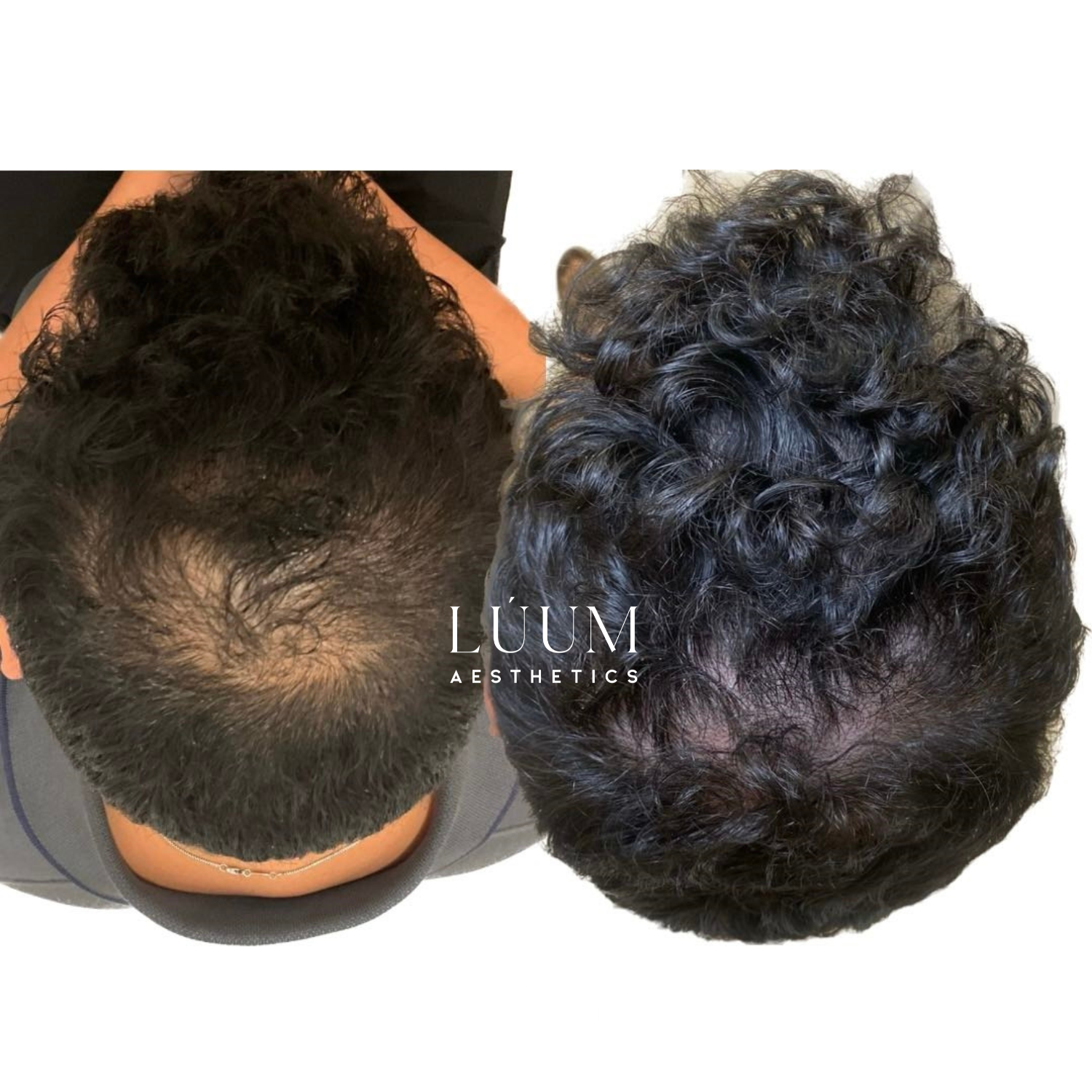
Allocure PRP is one of the in-clinic options our team may discuss with you for scalp and follicle support. The treatment uses a small sample of your own blood, which is processed to concentrate the platelets before being reintroduced to areas of the scalp experiencing thinning. Platelets carry growth factors that are thought to support the hair follicle environment.
Allocure PRP is typically delivered as a series of sessions rather than a single treatment, with your practitioner tailoring a schedule to your individual pattern of thinning.
As with all cosmetic procedures, results vary from person to person, and PRP is not a guaranteed fix for hair loss - it's one tool that may support the scalp alongside addressing any underlying cause.
Please refer to the FAQs and Risks for PRP Treatment on our Treatment Page here.
https://www.luumaesthetics.com/platelet-rich-plasma-injection-treatment-perth
Medical assessment with our Women's Health GP at LUUM Vitality
Hair thinning can be driven by:
- hormonal shifts
- thyroid function
- iron levels, or;
- other underlying factors
This may include a review of relevant bloods and a conversation about how menopause or recent weight changes may be playing a role.
Addressing the underlying driver - where one is identified - is often a meaningful part of a longer-term plan for hair health, alongside any in-clinic scalp support.
When it's worth getting checked
It's worth booking a consultation if you notice:
Shedding that feels heavier than your normal pattern for more than a few months
Thinning that's concentrated in one area, such as the part line or temples
Hair loss alongside other symptoms like fatigue, changes in periods, or noticeable changes in nails or skin
Shedding that started a few months after a period of weight loss or a significant life stressor
A proper assessment helps rule out (or identify) contributing factors before jumping straight to a treatment plan.
Frequently Asked Questions
Is hair thinning during menopause permanent?
Not necessarily. The degree and permanence of thinning varies by individual, and factors like genetics, timing, and any underlying causes all play a role. A clinical assessment is the best starting point for understanding your specific situation.
How long after weight loss does hair shedding usually start?
Shedding related to weight loss typically appears around two to three months after the triggering event, which is a recognised pattern with this type of hair loss.
Does PRP work for everyone?
Results vary between individuals, and PRP is generally considered alongside other factors like the extent and cause of thinning. Your practitioner can talk you through whether it may be a suitable part of your plan following an assessment.
Do I need blood tests before starting treatment?
This depends on your individual presentation. Our Women's Health GP can advise whether bloods are a useful step in understanding what's driving your hair thinning.
Can I have PRP and see the GP at the same time?
Yes - many women find it helpful to have both the medical and in-clinic sides of hair health addressed as part of the same overall plan, tailored to what your assessment shows.
If hair thinning has been on your mind, the first step is a conversation. Our team can talk you through what might be contributing to your individual pattern and what a considered plan could look like.